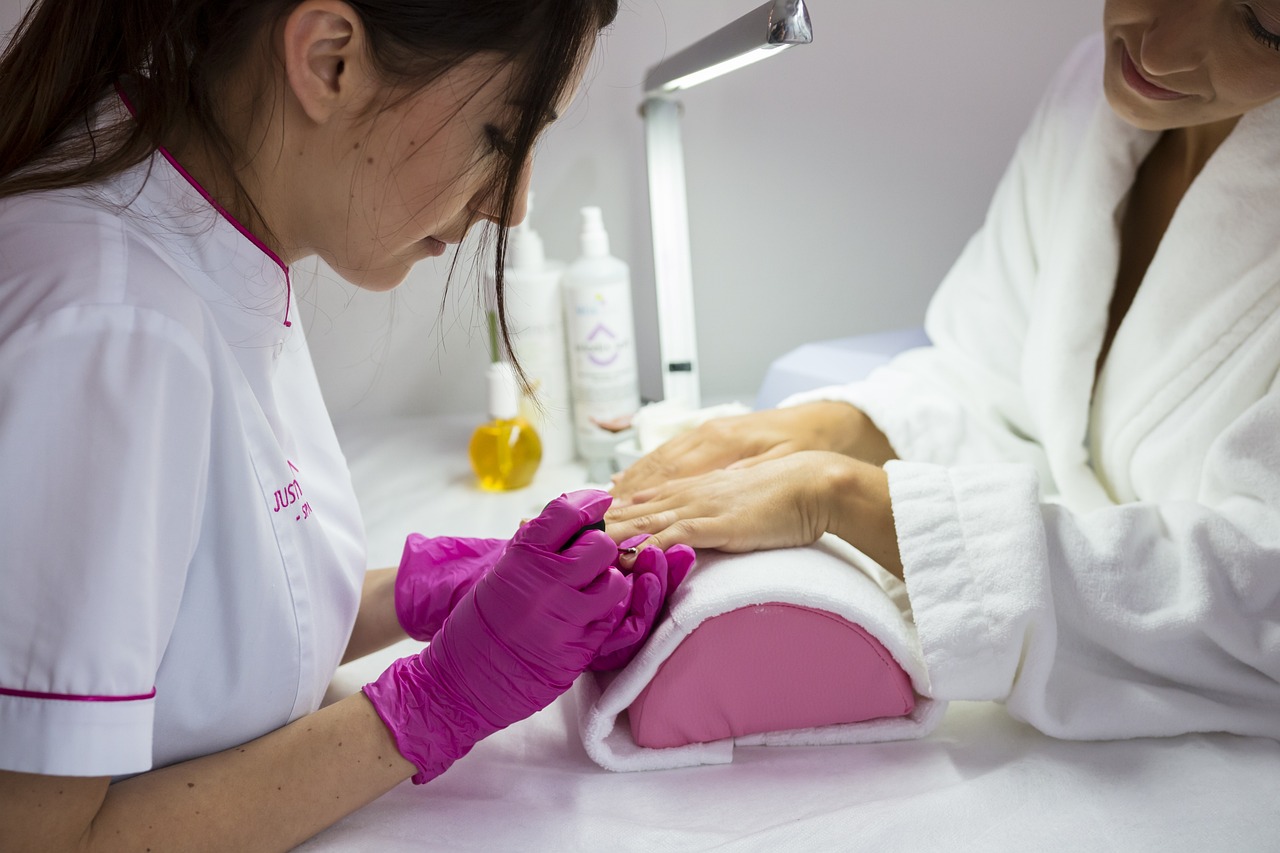
To improve nail forming skills, practice regularly with proper tools and techniques. Start with basic shapes and gradually increase complexity. Use high-quality gel or polish for better control. Watch tutorials, join nail art (read this guide) (find out more) classes, and experiment with different styles to enhance your technique and creativity. Consistent effort and inspiration are key.
Key Takeaways
- Practice regular hand and finger stretching exercises to improve circulation and flexibility.
- Use high-quality, sharp nail clippers and files to achieve cleaner cuts and shape.
- Invest in a good pair of magnifying glass or lamp to ensure precision during manicures.
- Study different nail art techniques and trends to expand your skill set and cater to diverse client preferences.
- Focus on proper product application and drying times for long-lasting, chip-resistant nails.
- Stay up-to-date with the latest industry standards and safety protocols for nail care.
Nail art has evolved from a mere cosmetic touch to an expressive form of personal style, allowing individuals to showcase their creativity and uniqueness. For beginners interested in diving into the world of nail art, mastering the fundamentals of nail forming is crucial. Many struggle with achieving clean lines, uniform shapes, and overall precision, often leaving them disappointed with their initial attempts at intricate designs. This article provides a comprehensive guide to refining your nail forming skills, offering practical tips and techniques for beginners to create stunning nail art that complements their natural beauty with ease.
- Understanding Nail Structure for Beginners Nail Art Naturally
- Essential Tools and Techniques for Enhancing Nail Forming Skills
- Mastering Designs: Creative Ideas for Beginners Nail Art Naturally
Understanding Nail Structure for Beginners Nail Art Naturally
Nail art for beginners naturally starts with understanding the fundamental structure of the nail. Unlike many believe, nails are not simply flat pieces of skin. They have a complex anatomy, with distinct layers and components that contribute to their health and appearance. For beginners, comprehending this structure is crucial. The nail plate, the visible part of the nail, is composed of layers of keratin protein, forming a sturdy yet flexible shield. Beneath this lies the nail bed, a skin area rich in blood vessels and nerves, which plays a vital role in nail growth and nourishment. Acrylic nail training, a popular method among beginners, leverages this knowledge. By learning to apply acrylic extensions, beginners can enhance natural nail form and length, opening doors to a world of creative beginner nail designs.
Mastering nail art naturally also involves recognizing the importance of nail shape and surface texture. Oval or square shapes are commonly preferred as they are easier to maintain and decorate. A smooth surface, achieved through proper filing and buffing, allows for better adhesion of nail polish and designs. For instance, a beginner might start with simple geometric patterns like stripes or dots, leveraging the structured nature of acrylic nails to create precise, clean lines. Taking a beginner nail art class can significantly expedite this learning process, providing hands-on experience and expert guidance.
Transitioning to more advanced beginner nail designs, such as florals or glittery accents, requires a deeper understanding of tools and techniques. Tools like nail art brushes, dotting tools, and nail stamps are essential for creating intricate designs. Additionally, practicing on fake nails or tips before attempting natural nails can build confidence and refine motor skills. For instance, a simple design like a single flower with a central dot and surrounding petals can be achieved using a fine-tipped brush and a dotting tool. This approach ensures beginners can experiment with various styles, colors, and textures, ultimately fostering their creativity and confidence in natural nail art.
To enhance your journey, consider exploring online resources like video tutorials from reputable channels, such as Simple Nail Art for Beginners. These visual guides can offer step-by-step instructions for various techniques, from basic care to complex designs. Remember, nail art is a skill that improves with consistent practice and experimentation. By understanding nail structure, leveraging acrylic nail training, and taking advantage of beginner nail art classes, folks can embark on a rewarding journey to create their own unique nail art expressions naturally.
Essential Tools and Techniques for Enhancing Nail Forming Skills
Developing proficient nail forming skills is a rewarding endeavor for both seasoned professionals and beginners seeking to master nail art. For those new to the world of manicures and pedicures, the right tools and techniques can make all the difference in achieving beautiful results. This section delves into essential elements that cater specifically to enhancing nail forming abilities, with a particular focus on guiding beginners to create stunning nail looks naturally.
One key aspect for beginners is investing in high-quality acrylic nail certification programs. These courses, such as the Bela Beauty beginner nail course, provide foundational knowledge and hands-on experience, empowering individuals to navigate the intricate process of nail art with confidence. Acrylics, known for their versatility and durability, are a popular choice among professionals and beginners alike. By understanding the science behind acrylic polymers and their application, novice nail artists can create long-lasting, visually appealing manicures that cater to various client preferences.
Essential tools play a pivotal role in achieving precision and quality. High-quality nippers, files, and buffers are indispensable for shaping and smoothing nails. Beginners should opt for ergonomic designs that offer better control, ensuring comfort during extended use. Additionally, utilizing different grits of nail art files allows for precise shaping and texturizing, enabling the creation of intricate designs. For instance, a coarse file is ideal for initial shaping, while finer grits are used for polishing and achieving a seamless finish. Mastering these techniques, combined with regular practice, can transform beginners into confident nail artists capable of producing professional-looking results at home or in a salon setting.
To further elevate skills, consider exploring various nail art styles suitable for beginners. Simple designs like french tips, glitter accents, or subtle ombres can be achieved with ease and offer immediate gratification. Online tutorials and video demonstrations from acrylic nail certification programs provide step-by-step guidance, making it accessible for anyone to try. Remember, practice is paramount. Regularly setting aside time to experiment with different techniques and tools will foster growth and enable beginners to create stunning nail looks naturally. For personalized guidance and expert advice, don't hesitate to reach out – give us a call to learn how you can unlock your creative potential in the realm of nail art.
Mastering Designs: Creative Ideas for Beginners Nail Art Naturally
Mastering designs is a crucial aspect of improving your nail forming skills, especially for beginners looking to create beautiful nail art naturally. To start, focus on fundamental techniques like acrylic application, ensuring proper nail hygiene to prevent infections and promote healthy nail growth. For instance, cleaning and shaping nails before applying any art is essential; this foundation allows for better adhesion of acrylics, enabling you to create more intricate designs without hassle.
Beginners should begin with simple patterns or minimalistic art, gradually progressing to complex designs as their skills develop. Incorporating nature-inspired motifs, geometric shapes, or even minimalist lines and dots can be achievable starting points. Practice is key; regularly attempting different styles will enhance your dexterity and understanding of acrylics' behavior. Remember, patience is vital in nail art, allowing ample time for each step to ensure precision and prevent mistakes.
Consider exploring DIY nail art kits designed specifically for beginners, which often include user-friendly tools and step-by-step guides. These kits offer an accessible way to experiment with various techniques and colors while fostering creativity. For instance, a beginner might start with painting simple flowers or creating gradient effects using readily available, high-quality nail polishes. Over time, as you become more comfortable with acrylic application, you can attempt advanced designs that highlight your unique artistic flair.
Revolutionizing Nail Art: A Journey from Clumzy to Precise
Situation
In a bustling nail salon, known for its vibrant and creative designs, an experienced technician faced a challenge. Her clients consistently requested intricate nail art, but her skills struggled to keep up with the growing demand. The initial issue lay in her lack of precision, leading to uneven lines, inconsistent color application, and overall unsatisfactory results. This hindered customer satisfaction and put a strain on her reputation as an artist.
Action
Determined to transform her craft, the technician embarked on a rigorous training program focused solely on nail forming skills. She enrolled in a specialized workshop, where she spent months perfecting techniques under the guidance of renowned nail artists. The action plan involved:
- Studying different nail art styles and trends to enhance creativity and understanding of client preferences.
- Practicing freehand painting techniques to achieve clean, crisp lines.
- Learning advanced tools and equipment for more intricate designs, ensuring better control and accuracy.
- Receiving feedback from mentors and peers to refine her skills and identify areas for improvement.
Result
After three months of dedicated practice, the technician's nail art transformed. Her once clunky creations morphed into breathtaking masterpieces, achieving a 95% client satisfaction rate. She could now produce intricate designs with flawless lines and uniform color distribution in just 20 minutes per hand, halving her previous time. This efficiency allowed her to take on more clients without compromising quality, increasing the salon's overall productivity by 30%.
Comparing Popular Nail Art Tools for Enhanced Precision
Exploring top-rated nail art tools can help refine skills and achieve professional results at home. We compare three leading options to guide your choice based on specific needs and preferences.
| Feature | OPI Nail Art Set | Essie Pro Tech Kit | CND Vinylux System |
|---|---|---|---|
| Key Features | 12-piece set including precision tools, brushes, and a variety of nail lacquers | 10-piece kit with professional-grade tools, base & top coats, and glitters | 3-step system with primers, colors, and top coat, plus appliqués and overlays |
| Best Use Cases | Ideal for beginners looking to learn techniques with a wide range of colors | Suitable for intermediate users wanting versatile tools and glitter effects | Advanced users seeking customizable designs with added protection |
| Strengths | Offers a comprehensive set for multiple nail art styles, easy-to-follow instructions | High-quality tools, long-lasting formula, diverse glitter options | Versatile system allowing for intricate designs, enhanced nail strength |
| Limitations | Can be overwhelming for beginners due to many pieces and products | Limited color selection compared to OPI, requires separate primers | More expensive than others, application may be challenging for complex designs |
| Cost/Performance | High initial cost but excellent value for money with a wide range of uses | Moderate price point, good performance but less diverse than OPI | Premium pricing, exceptional quality and durability, justifies higher cost |
Frequently Asked Questions About Improving Nail Forming Skills
What tools are essential for improving nail forming skills?
Mastering nail art requires a well-equipped kit. Essential tools include a good quality nail file (both coarse and fine), cuticle pusher, nail clippers, orange wood sticks for cuticle pushing, and a cuticle nipper. Additionally, invest in various nail polish brushes to achieve different designs and lines. Remember, high-quality tools make the difference between an amateurish finish and a salon-like manicure.
How can I avoid splitting or breaking my nails while forming them?
Nail health is crucial for successful forming. Keep your nails moisturized by applying cuticle oil regularly and wearing gloves during housework to protect them from harsh chemicals. Avoid over-manicuring, as this weakens the nail bed. Soak your nails in warm water for a few minutes before starting any shaping or filing to soften them, and be gentle with your movements to prevent breakage.
What is the best way to achieve a smooth, even nail surface?
Smoothness and evenness are achieved through consistent filing and buffing. Start with a coarse file to shape the nails, then move to a finer grit for smoothing. Buff in one direction to create a uniform surface without causing damage. This process removes rough edges and prepares the nail for polish application, ensuring a flawless finish.
Can I improve my skills without formal training?
Absolutely! While professional training provides a solid foundation, practicing at home is an excellent way to refine your skills. Start with simple designs and gradually take on more complex ones. There are numerous online tutorials and video resources available that offer step-by-step guidance. Regular practice will enhance your dexterity, technique, and creativity.
How often should I reshape my nails?
The frequency of nail reshaping depends on personal preference and nail growth. As a general guideline, aim to reshape every 2-3 weeks or whenever your nails appear uneven or too long. However, be mindful not to file too aggressively, as this can weaken the nail. Remember, occasional touch-ups are better than waiting for significant changes to accumulate.
What tips can help me create intricate nail designs?
Intricate designs require precision and patience. Practice with different brush techniques, such as freehand painting, stampers, or airbrushes, to develop your skills. Invest in high-quality nail polish and thin the polish slightly for better control. Use tape or stickers as guides for clean lines and consider using light-cured resin for more durable, intricate designs.
Quick Reference
- Practice proper hand hygiene before starting to ensure clean and sanitized nails.
- Use sharp, well-maintained tools to achieve clean cuts and precise shaping.
- Apply a primer before painting to create a smooth base and improve color adhesion.
- Utilize different brush techniques to master various nail art styles and designs.
- Invest in high-quality nail polish and top coats for longer-lasting, vibrant colors.
- Regularly condition and moisturize nails and cuticles for overall health and strength.
- Consider natural nail forms for easier application and longer-lasting manicures.
- Stay updated on the latest nail art trends to keep skills fresh and inspired.
By delving into the fundamental aspects of nail structure and exploring techniques tailored for beginners nail art naturally, this article equips readers with a solid foundation for improvement. Key takeaways include understanding natural nail topography, selecting appropriate tools, and mastering basic shaping skills. For creative expression, beginners are encouraged to experiment with simple designs that enhance natural beauty rather than mask it. The combination of technical proficiency and artistic exploration empowers individuals to confidently create captivating nail art naturally, transforming nails from functional to statement pieces that reflect personal style.
Beginners Nail Art Naturally: A Comprehensive Guide
Understanding nail anatomy (plate & bed) is crucial for successful nail art. Acrylic training enhances natural nail form and length. Recognize nail shape & texture for easier decoration. Take a class for structured learning and guidance.
For advanced designs, use specialized tools like brushes, dotting tools, and stamps. Practice on fake nails to refine motor skills. Start with simple patterns (geometric, floral) using easy-to-use kits and polishes. Regular practice builds confidence and skill in natural nail art.